
Dubai’s restaurant dream is collapsing into a brutal reality as empty tables, vanishing tourists, and impossible rents expose the fragile side of the city’s luxury dining empire.
Dubai’s restaurant industry is facing a crisis that looks glamorous from the outside but devastating from inside the kitchen.
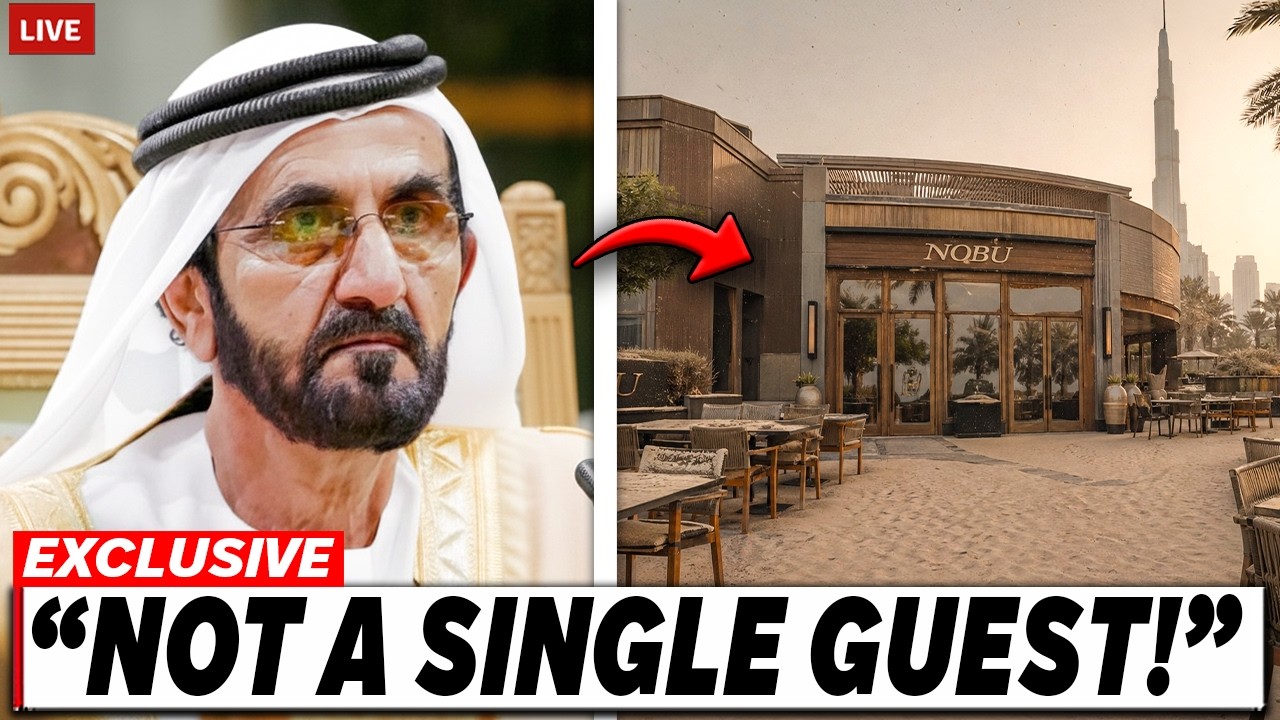
In a city famous for rooftop dinners, celebrity chefs, luxury brunches, and glittering waterfront venues, many restaurants are now staring at empty rooms night after night.
The candles are still lit.
The menus are still polished.
The chefs still arrive before sunrise.
But the customers who once filled the tables have vanished.
According to the account, footfall across Dubai’s restaurant sector has fallen to a fraction of normal levels, leaving owners, workers, and investors trapped in a financial nightmare.
For a restaurant built to serve 100 people, seeing only 15 walk through the door is not a slow night.
It is a warning sign.
It is the sound of a business model breaking in real time.
The hardest part is that the costs have not disappeared with the customers.
Rent still comes due.
Electricity still runs.
Food suppliers still deliver.
Staff still need salaries.
Licenses, insurance, gas, maintenance, and delivery commissions continue to drain money from businesses already fighting to survive.
That is the brutal truth behind Dubai’s empty restaurants.
The city did not simply build places to eat.
It built an entire hospitality machine designed around tourism, corporate spending, and temporary wealth.
For years, that machine worked beautifully.
Dubai became a global dining destination.
Michelin recognition gave the city even more prestige.
Celebrity chefs arrived.
Luxury concepts multiplied.
Investors believed the boom would continue forever.
The problem was hidden inside the success.
Many restaurants depended heavily on tourists, business travelers, transient expats, and high-spending visitors.
Those customers made the rooms look full.
They made the numbers look strong.
They made expansion look logical.
But they were not a stable community.
They were a crowd.
And when that crowd disappeared, the weakness underneath became impossible to ignore.
A restaurant cannot survive on atmosphere alone.
It needs people who return.
It needs local regulars.
It needs a community that treats the place not as a luxury photo opportunity but as part of everyday life.
That is where Dubai’s dining scene now faces its most painful question.
Who were these restaurants really built for.
In cities like Paris, Istanbul, Tokyo, or Bangkok, restaurants often survive tourism drops because locals remain the foundation.
Families still eat there.
Workers still stop by.
Neighborhood customers still return because the restaurant belongs to their daily rhythm.
Dubai’s most ambitious dining venues often operate differently.
Many were designed for visitors, influencers, business entertainment, and people chasing the feeling of luxury.
That made them powerful during the boom.
It made them fragile during the collapse.
For owners, the crisis is not theoretical.
It is personal.
One hospitality group reportedly cut salaries by 30 percent across the company just to keep operating.
That kind of decision is not made lightly.
It means owners are choosing between two kinds of pain.
They can cut wages and keep the doors open.
Or they can close and send everyone home.
Neither option feels like victory.
For small restaurant owners, the trap is even worse.
Many signed expensive leases during better times.
Some pay tens of thousands of dollars a month for premium locations.
Those leases do not suddenly become affordable because tourists stop arriving.
Breaking them can be financially disastrous.
Keeping them can be just as dangerous.
The business becomes a cage.
The owner opens every morning not because the numbers make sense, but because closing feels like surrender.
Workers are trapped too.
Kitchen porters, waiters, cleaners, cooks, and floor staff are often tied to their jobs through sponsorship and visa arrangements.
A salary cut does not just reduce income.
It threatens survival.
Tips disappear when tables are empty.
Hours shrink.
Pressure grows.
Yet many workers continue showing up because leaving the job could mean losing the right to remain in the country.
That is the human side hidden behind the luxury image.
The empty tables do not only hurt investors.
They hurt the people washing dishes, preparing food, serving guests, and sending money home to families who depend on them.
The delivery apps have not solved the crisis either.
Many restaurants tried to pivot toward home delivery, hoping online orders would replace lost dining room revenue.
But delivery platforms take large commissions.
For a restaurant already suffering an 80 percent revenue collapse, losing another major share of every order can turn survival into slow bleeding.
Discounting creates another trap.
Lower prices may attract a few customers, but if footfall remains low, the restaurant earns less from fewer people.
That is not recovery.
It is desperation wearing the costume of activity.
Food waste is another quiet disaster.
Restaurants built premium menus around imported ingredients, specialty produce, seafood, meats, and luxury items.
Supplier contracts made sense when rooms were full.
Now, ingredients arrive for customers who never come.
Some of that food is wasted.
Some menus are cut.
Some chefs are forced to compromise on the very quality that once defined their reputation.
Meanwhile, the talent that made Dubai’s restaurant scene world-class is beginning to look elsewhere.
Experienced chefs, managers, and hospitality professionals are receiving offers from Saudi Arabia, Singapore, Istanbul, and other growing markets.
If they leave, Dubai will not only lose businesses.
It will lose the human infrastructure needed to rebuild when demand returns.
That is why this crisis matters beyond today’s empty tables.
A restaurant scene can recover from lost revenue.
It is much harder to recover from lost talent.
Dubai’s leaders may understand the emergency, and discussions about rent relief, licensing support, and tourism recovery may help.
But financial relief alone cannot fix the deeper structural problem.
The city must decide whether its food industry should continue depending on temporary visitors or whether it can build stronger roots among residents.
That means more community-driven restaurants.
It means realistic rents.
It means dining concepts designed for repeat customers, not only Instagram moments.
It means building restaurants that can survive when the global crowd goes quiet.
The tragedy is that many of the current owners did nothing wrong except believe the boom would last.
They invested.
They hired.
They trained staff.
They built beautiful spaces.
They helped make Dubai one of the most talked-about dining cities in the world.
Now they are left doing math at midnight, wondering how long they can keep the lights on.
The image is haunting.
A dining room prepared for 40 tables with only three occupied.
A chef cooking for a city that no longer appears hungry.
A waiter folding napkins for guests who may never arrive.
An owner staring at rent, payroll, and bank balances, hoping tomorrow will be different.
This is not just a Dubai restaurant crisis.
It is a warning to every economy built on spectacle without enough stability underneath.
Crowds can make a city feel invincible.
Community is what keeps it alive when the crowds disappear.
Dubai’s restaurants are still setting the tables.
The candles are still burning.
The doors are still open.
But the question is becoming impossible to avoid.
Will Dubai rebuild its dining economy around the people who actually live there, or will its most ambitious restaurant dream fade into a luxury memory built on borrowed crowds and borrowed time.
