
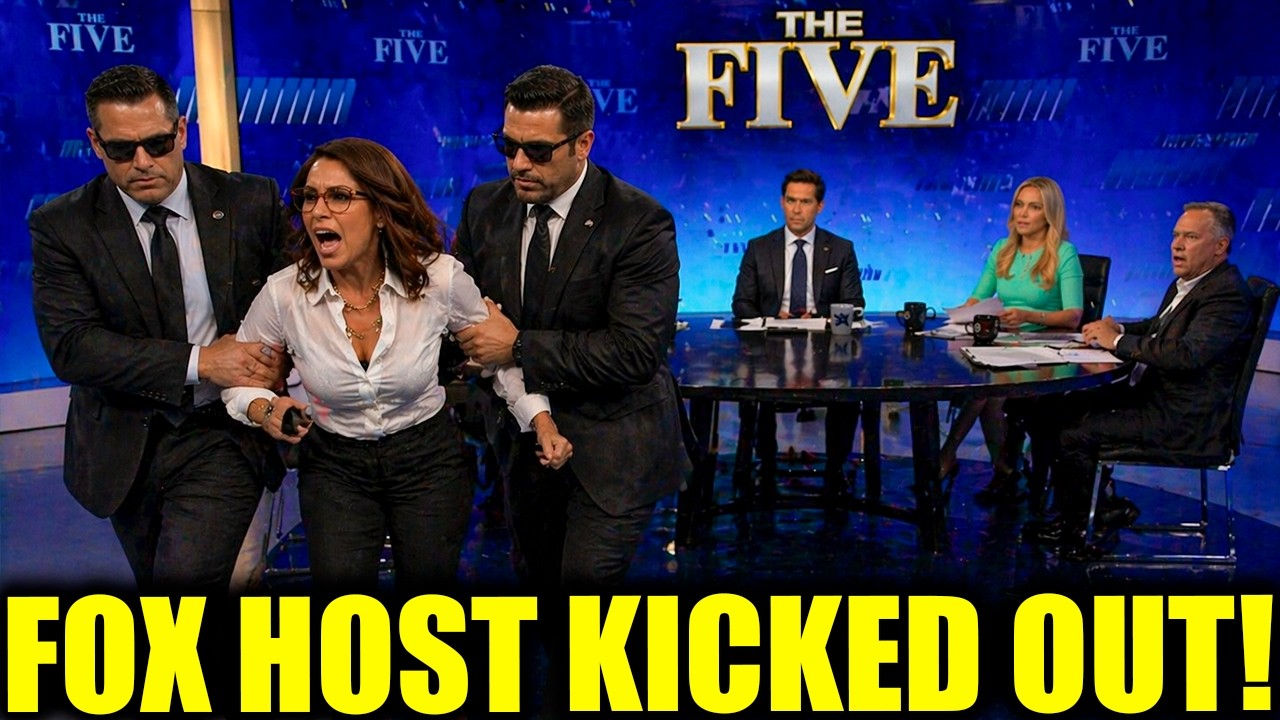
Greg Gutfeld’s Explosive Clash With Jessica Tarlov Turns Fox News Debate Into a Firestorm Over Race, Politics, and America’s Deepest Divide.
The latest on-air clash involving Greg Gutfeld and Jessica Tarlov has become another flashpoint in America’s never-ending political culture war.
What began as a tense discussion about racism, political narratives, and the Southern Poverty Law Center quickly spiraled into a fiery confrontation that exposed just how divided the national conversation has become.
At the center of the debate was a familiar but deeply controversial question.
Is America facing a genuine crisis of extremism, or has the issue been amplified by political forces, media institutions, and advocacy groups with something to gain?
Tarlov argued that concerns about racism and white supremacy did not suddenly appear in recent years.
She pointed to the backlash against Barack Obama’s presidency and referenced deadly attacks in places such as El Paso, Buffalo, and the Tree of Life synagogue as proof that hatred has had real and devastating consequences.
Gutfeld and others on the panel pushed back hard.
They argued that the political left has used accusations of racism too broadly, turning legitimate concern into a weapon that paints millions of ordinary Americans as villains.
The exchange grew sharper when the Southern Poverty Law Center became part of the debate.
Critics on the panel suggested that organizations like the SPLC benefit financially and politically from keeping fear alive.
They pointed to past accusations against the group and questioned whether its influence has helped intensify division rather than reduce it.
Tarlov acknowledged controversy around the organization but rejected the idea that racism and extremism were simply manufactured.
That was the moment the debate exploded.
Gutfeld accused the left of building a narrative that treated conservatives, working-class voters, and ordinary citizens as threats hiding in plain sight.
He argued that this kind of language does not heal the country.
It deepens resentment.
It turns neighbors into suspects.
It makes political disagreement feel like moral warfare.
The most dramatic part of the clash came when Gutfeld suggested that years of inflammatory rhetoric had created real-world consequences.
His argument was not just about television debate.
It was about the danger of a culture where accusations become identities and where political opponents are no longer debated but demonized.
Tarlov, however, refused to let the issue be reduced to media exaggeration.
She insisted that real victims, real violence, and real extremist incidents cannot be brushed aside as convenient exceptions.
Her point was simple.
Even if some narratives are exaggerated, the existence of actual hate-driven violence still matters.
That tension is exactly why the segment spread so quickly.
Both sides were not merely arguing about one organization or one television clip.
They were arguing over who gets to define reality in America.
For conservatives watching the exchange, Gutfeld appeared to be saying what they believe many media figures refuse to admit.
They see themselves as unfairly blamed for social problems they did not create.
They believe institutions have turned “racism” into a political label used to silence dissent.
For liberals watching the same exchange, Tarlov appeared to be defending painful truths that should not be dismissed because they are politically inconvenient.
They see the denial of extremism as dangerous.
They believe that ignoring threats only makes future violence more likely.
That is why the confrontation felt bigger than Fox News.
It reflected the emotional exhaustion of a country trapped between two competing fears.
One side fears being falsely accused.
The other fears real hatred being normalized.
One side sees a political industry built on grievance.
The other sees a refusal to face ugly facts.
The result is a national argument where every tragedy becomes evidence, every accusation becomes a battle, and every televised debate becomes a symbolic trial.
The controversy also raises a difficult question for the media.
Are cable news panels helping Americans understand each other, or are they turning every issue into a spectacle designed to reward outrage?
The answer may be uncomfortable.
Segments like this attract attention because they are emotional, sharp, and dramatic.
They also often leave viewers more convinced that the other side is dishonest, dangerous, or delusional.
That may be good for ratings.
It is not necessarily good for the country.
Still, the clash revealed something important.
The debate over racism in America is no longer just about facts, statistics, or isolated incidents.
It is about trust.
Who do people trust to tell the truth?
Who do they believe is manipulating them?
Who do they think is profiting from fear?
Until those questions are answered, these arguments will keep returning with more anger and less patience.
Gutfeld’s defenders will say he exposed a political machine that thrives on division.
Tarlov’s defenders will say she refused to let real victims be erased from the conversation.
Both reactions show how far apart the country remains.
In the end, the segment did not settle the debate.
It intensified it.
It gave each side a new clip, a new villain, and a new reason to believe that the other side refuses to see the truth.
And perhaps that is the most revealing part of all.
America is not only divided over politics.
It is divided over the meaning of reality itself.
