
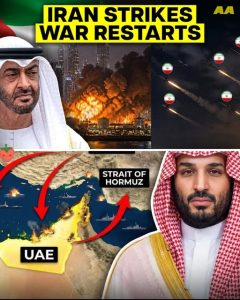
Iran’s internal power struggle is now spilling into the open, as the president reportedly blames the IRGC for strikes on the UAE while the United States rapidly moves more military power into the Gulf.
The crisis around the Strait of Hormuz is no longer just a confrontation between Iran and the United States.
It is becoming a dangerous struggle inside Iran itself.
According to the provided account, Iranian President Masoud Pezeshkian was reportedly furious after the IRGC launched missile and drone strikes on the UAE without government coordination.
That claim, if accurate, exposes one of the most serious fractures inside the Iranian state.
The elected government may be speaking the language of diplomacy.
The foreign ministry may be negotiating behind closed doors.
But the IRGC appears to be acting like a separate war-making power.
That is the kind of split that can push a country into conflict even when diplomats are trying to avoid one.
The UAE attack has become a flashpoint because it came during an already fragile ceasefire.
For weeks, the region had been living under extreme tension after attacks on shipping, threats in Hormuz, and U.S. efforts to reopen maritime transit.
Then the IRGC allegedly struck Emirati targets, escalating the conflict with a Gulf neighbor that Iran can barely afford to provoke.
President Pezeshkian reportedly called that strategy madness and warned of irreversible consequences.
That language is extraordinary.
It suggests that even inside Tehran, some officials understand how dangerous the IRGC’s gamble has become.
The Revolutionary Guard may believe escalation is the only way to regain leverage.
But the more it attacks, the more it risks dragging Iran into a larger war.
The core issue is the Strait of Hormuz.
Iran once believed it could use the waterway as its greatest pressure weapon.
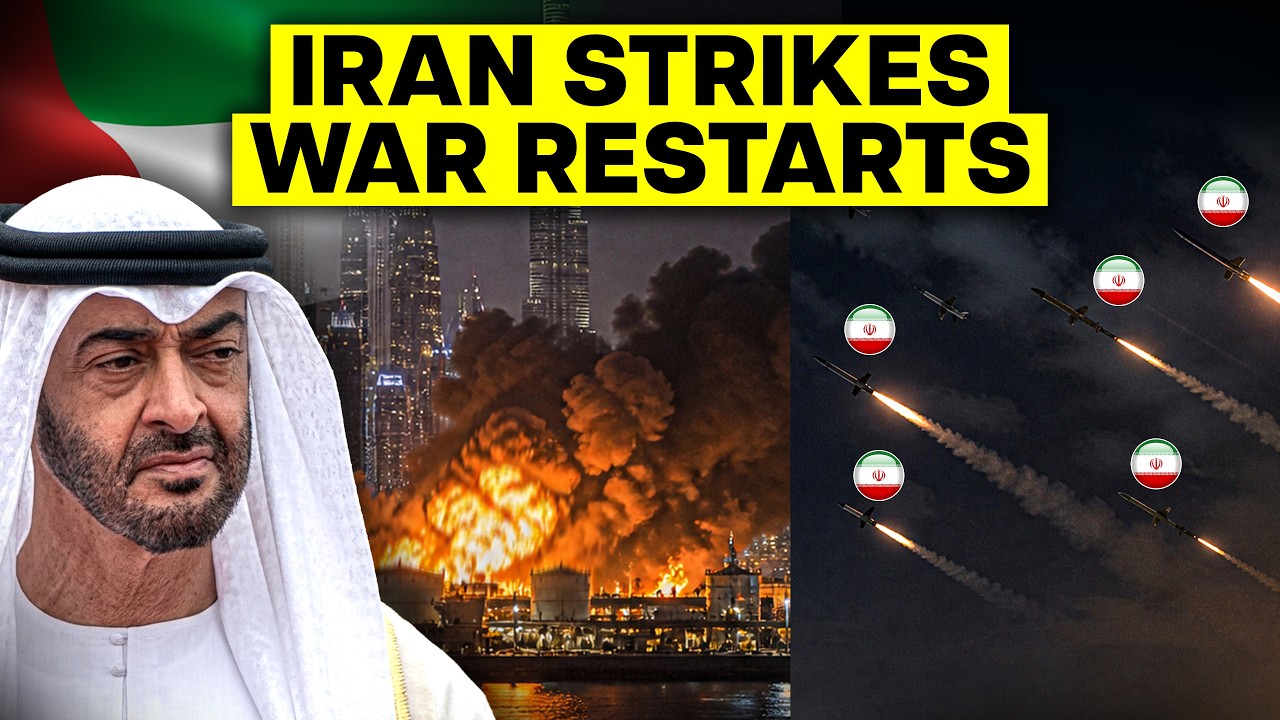
By threatening ships and raising the cost of maritime movement, Tehran hoped to force the world to take its demands seriously.
But the United States responded with Operation Project Freedom, a mission designed to help commercial vessels trapped in the Persian Gulf move safely through the strait.
Some ships had reportedly been stuck for more than 60 days, running low on supplies and unable to continue normal trade.
For Washington, this became both a humanitarian mission and a strategic challenge.
If the U.S. could reopen Hormuz, Iran’s leverage would shrink dramatically.
That appears to be exactly what happened when commercial vessels reportedly crossed the strait with American support.
The shipping company Maersk reportedly announced that it had crossed Hormuz with American escort without disruption.
At the same time, U.S. Navy destroyers reportedly crossed the strait under heavy Iranian fire.
The provided account says the USS Truxtun and USS Mason were backed by fighter aircraft and helicopters while facing Iranian small boats, missiles, and drones.
U.S. Central Command officials reportedly said cruise missiles, drones, and small boats targeted both American and commercial vessels, while helicopters sank the attacking boats.
That was a devastating signal to the IRGC.
Iran could threaten the waterway, but it could not stop the operation.
The U.S. could defend itself, defend commercial ships, and keep traffic moving.
That is why the IRGC may have chosen to escalate elsewhere.
If it could not fully control Hormuz, striking the UAE could send another message.
But that message may have backfired.
The United States has reportedly begun moving large numbers of aerial refueling tankers and military assets toward the Gulf, especially into the UAE.
Satellite and flight-tracking reports referenced in the source material suggest unusually heavy traffic around regional bases.
That kind of movement often signals preparation, deterrence, or both.
The region is now watching closely for signs of retaliation.
Israeli media reportedly suggested that the U.S. and Israel were considering strikes on Iranian missile launchers and energy facilities in response to the UAE attack.
If that happens, the ceasefire could collapse completely.
Iran would then face the possibility of a renewed air campaign at the same time its leadership appears divided.
That is why the internal split matters so much.
A unified government can make hard decisions in war.
A divided government can stumble into disaster.
If the foreign minister negotiates while the IRGC attacks, no outside power can trust Tehran’s promises.
If the president calls for diplomacy while armed commanders fire missiles, every diplomatic channel becomes fragile.
If Gulf states believe Iran’s government cannot control its own military forces, they will prepare for worst-case scenarios.
That is how crises spread.
The explosions reported along Iran’s southern coast add another layer of uncertainty.
According to the source material, blasts were reported near Qeshm, Bandar Abbas, and other areas close to the Strait of Hormuz.
The cause of those explosions remains unclear in the provided account.
But their timing increases the sense that the region is moving toward a new phase.
Ports and islands near Hormuz are strategically critical.
They support naval operations, logistics, missile deployments, and maritime surveillance.
If explosions are happening near those zones while U.S. assets are moving into the UAE, the risk of wider conflict rises sharply.
President Trump has also been speaking about Iran’s oil problems and the pressure created by storage limits.
According to the account, he suggested that Iran may soon face severe damage to its oil system if production must be shut down because storage capacity is exhausted.
That economic pressure is central to Washington’s strategy.
Iran relies heavily on oil revenue.
If its exports are blocked, its ships are trapped, and its storage fills up, the regime faces not only military pressure but financial strangulation.
That can weaken its ability to fund the IRGC, pay loyal forces, and stabilize the domestic economy.
Trump also emphasized that any deal must address Iran’s nuclear program and missile production.
He reportedly said the United States wants highly enriched uranium returned and wants limits on missile capability.
That shows the negotiation track is still alive, but under extreme pressure.
Washington appears to be combining military readiness, economic blockade, and diplomatic demands.
Tehran is trying to negotiate while parts of its own security establishment may be escalating independently.
That is a dangerous formula.
Another explosive idea returned to the conversation when Senator Lindsey Graham suggested arming Iranians who oppose the regime.
Trump responded by saying that many Iranians would fight back if they had weapons, though he also expressed concern about the human cost.
This matters because it shifts the conflict from pressure on the regime to possible support for internal uprising.
That is one of Tehran’s deepest fears.
The regime can survive foreign threats if it remains internally disciplined.
It becomes far more vulnerable if its own people and its own armed institutions begin to fracture.
The situation now contains three overlapping crises.
First, there is the military crisis in Hormuz, where the U.S. is trying to reopen commercial transit and Iran is trying to preserve leverage.
Second, there is the regional crisis after the UAE attack, which could trigger direct retaliation.
Third, there is the internal Iranian crisis, where the president, foreign ministry, and IRGC may not be operating from the same playbook.
Any one of these crises would be dangerous alone.
Together, they create a combustible moment.
For Iran, the choices are narrowing fast.
It can rein in the IRGC and return to negotiations.
It can continue escalation and risk U.S. or Israeli strikes.
It can try to use the strait as leverage, even as Project Freedom proves that leverage may be weakening.
Or it can face a growing domestic crisis if economic pressure and military humiliation begin to undermine confidence in the regime.
For the United States, the challenge is also delicate.
A strong response may restore deterrence.
But an excessive response could ignite a broader war.
A weak response could encourage more attacks.
But too much pressure could push Iran’s fractured system into unpredictable behavior.
That is why the coming days may define the future of the Gulf.
The Strait of Hormuz is no longer just a shipping route.
It is now the stage for a test of command, control, and survival inside Iran.
If the IRGC continues acting independently, Iran may find itself dragged into a war its diplomats cannot stop.
If Washington responds with force, the region could enter a new and far more dangerous phase.
And if Iran’s president truly cannot control the forces firing missiles in his country’s name, the world may be watching the early signs of a regime losing control from within.
